Crunchbase Alternatives for VC Analysts: 5 Tools (2026)
Summary
The best Crunchbase alternatives for an early-stage VC analyst are Dealroom for European coverage, Specter and Harmonic for pre-round sourcing, PitchBook for verified valuations, and Tracxn for sector research. Crunchbase Pro costs about $588 a seat per year. Most alternatives are quoted at $6,000 to $40,000 a year, so the right pick depends on whether you source deals or verify them.
Short answer: among Crunchbase alternatives for a small European fund, Dealroom wins on regional depth, Specter and Harmonic win on early signals, and PitchBook wins on verified data. Crunchbase still makes sense as a low-cost lookup. The right tool depends on which job you are replacing.
Why analysts look for Crunchbase alternatives
Crunchbase is easy to buy. Pro starts at $49 per seat per month billed annually, or $99 monthly, with 2,000 exported rows a month. That cap and the crowdsourced inputs are the usual reasons analysts start comparing.
Two gaps come up repeatedly in seed screening. The first is timing: Crunchbase mostly records a round after it is announced. The second is geography: a Zurich or Munich pre-seed round often reaches the database late, or with missing fields.
None of this makes Crunchbase a bad product. It is a good record of announced funding. Whether that is enough depends on how much of your Monday morning shortlist comes from companies nobody has written about yet.
What the comparison measures
We scored six dimensions: price per year, published coverage, early-stage sourcing signals, fit for European and Swiss funds, API and CRM sync, and contract terms. The table above shows each value. Estimated prices come from third-party buyer reports, not vendor price lists, and should be confirmed in a quote.
Dealroom: the default for European seed funds
Dealroom is the only tool in this group built around European ecosystems first. Its homepage positions it as intelligence for tech ecosystems, and its regional reports are the kind of material an LP update quotes. G2 shows 4.6 out of 5, with 85% of reviews at five stars.
Cost is the main friction. Third-party reports put a three-seat plan near EUR 12,600 a year, and the public pricing page quotes 10 seats at EUR 30,000. A two-person fund will pay for a seat it does not use. For a four or five person team, the per-seat maths is reasonable against PitchBook.
Specter and Harmonic: sourcing before the announcement
Both tools aim at the same gap. They look at founders and hiring rather than waiting for a press release.
Specter claims 50 million companies, 700 million people and 350,000 investors, with a focus on people data to find startups early. Harmonic lists 40 million companies and 200 million people profiles, a plain-language search assistant called Scout, and API and MCP access.
The trade-off is price transparency. Neither publishes a seat price in the sources we checked, and Harmonic is estimated near $25,000 a year for three seats. Run a demo on a quarter of your own past deals before signing: if the tool would have surfaced the ones you missed, the price is defensible. If it only surfaces companies you already track, it is not.
PitchBook: verified data, institutional price
PitchBook covers about 4.5 million companies, 2.5 million investments, 525,000 investors and 125,000 funds, and it is owned by Morningstar. G2 shows 4.5 out of 5 from 261 reviews. It is the strongest option when an IC memo needs a verified valuation, a cap table or fund-level data.
It is also the least suited to sourcing. Its strength is what happened after a deal closed. At estimated $20,000 to $40,000 per seat on annual contracts, a small fund should buy it only if diligence work regularly needs those fields.
Tracxn: sector maps and a free tier
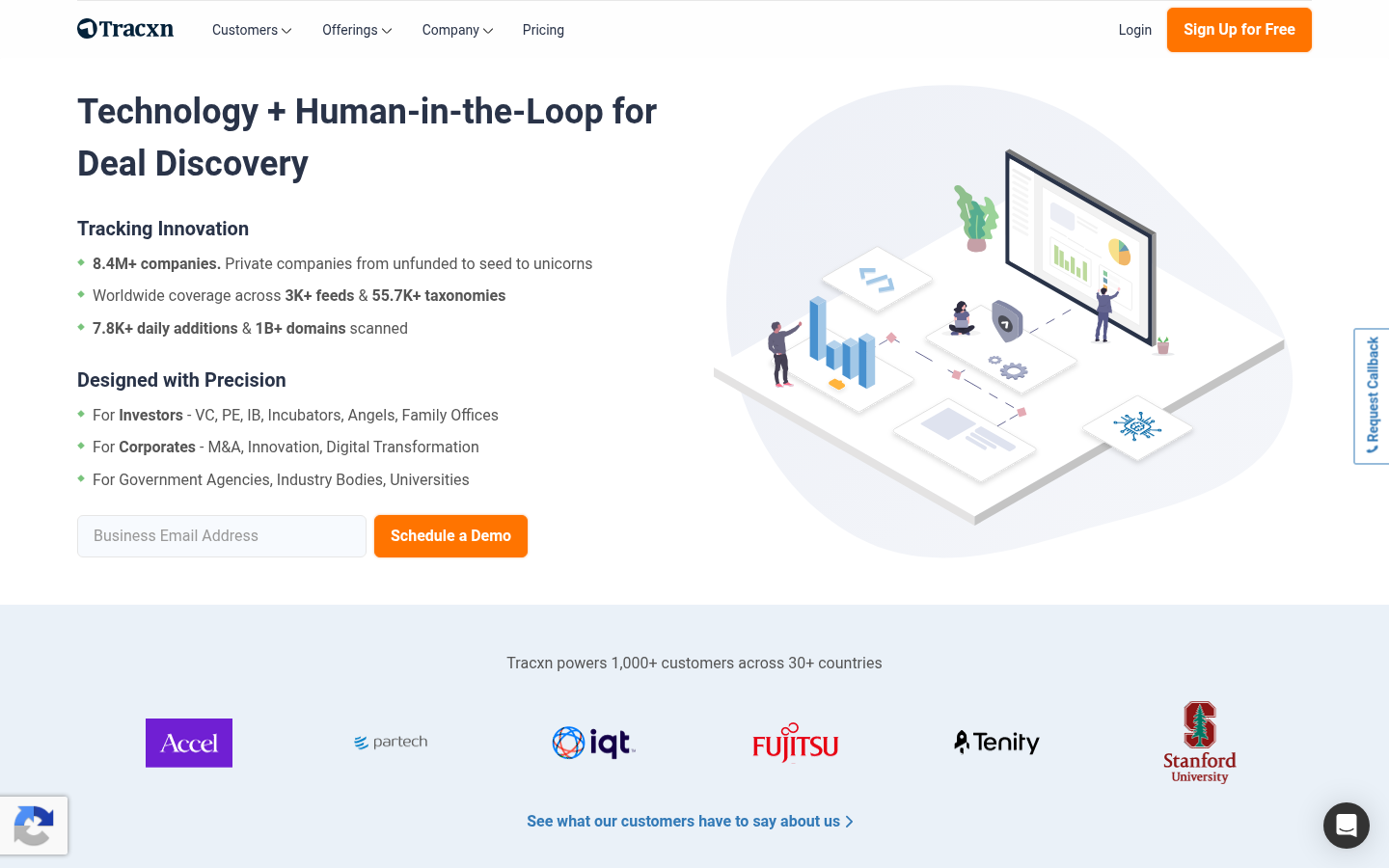
Tracxn organises companies into a curated sector taxonomy and publishes analyst-written landscape reports. Its homepage claims more than 850 VC, PE, bank and corporate clients. A free Lite tier lets an analyst check coverage of a niche before any budget request.
It is strongest in India and Southeast Asia. For European seed it is adequate, not leading. Use it when a thesis memo needs a sector map, not when the task is a weekly sourcing run.
Which tool fits which fund
The decision rests on two questions: do you find deals or verify them, and where do your deals come from?
Two-person fund, tight budget: stay on Crunchbase Pro and add the Tracxn free tier for sector reading.
Four to five person European seed fund: Dealroom first, then trial Specter or Harmonic for pre-round signals.
Fund with heavy diligence and LP reporting: PitchBook, ideally on one or two seats.
Fund with an engineer and daily sourcing: Harmonic, for the API and bulk delivery.
Limits of this comparison
Pricing is the weakest data point. Four of the six vendors do not publish list prices, so estimates carry a wide margin and discounts of 20% or more on multi-year terms are reported for PitchBook. Coverage numbers are vendor claims and are not directly comparable, because each vendor counts a company differently.
Request access to a trial or demo for the two tools that survive your shortlist, and test them on ten deals you already know the outcome of.
At-a-glance
| Dealroom | Specter | Harmonic | PitchBook | Tracxn | |
|---|---|---|---|---|---|
| Price per year | About EUR 12,600 for 3 seats (third-party report); 10 seats quoted EUR 30,000 | Quoted, no public price in the sources we checked | Quoted; third-party estimate near $25,000 for 3 seats | Quoted; third-party estimates $20,000 to $40,000 per seat | Free Lite tier; Premium quoted, estimated $6,000 to $24,000 |
| Published coverage | Startups, investors, founders and ecosystem reports, strongest in Europe | 50M+ companies, 700M+ people, 350K+ investors, 1M+ transactions | 40M companies, 200M people, 250K investors | About 4.5M companies, 2.5M investments, 525K investors, 125K funds | Curated sector taxonomy with analyst-written sector reports |
| Early-stage sourcing signals | Growth and talent data on ecosystem maps | People and company data aimed at surfacing startups before announcements | Scout natural-language search, triggers, network mapping | Post-announcement deal and valuation data, little pre-round | Sector feeds and curated company lists |
| EU and Swiss fit | Best of the group, regional reports for DACH, France, UK | Global; EU depth varies by sector | Global; strong on US-origin founders | Broad EU deal history, priced for large funds | Strongest in India and Southeast Asia, adequate in Europe |
| API and CRM sync | API and exports; confirm tier scope in a quote | API and exports; confirm CRM sync scope in a demo | API, MCP access, CRM sync add-on, bulk delivery to S3 or Snowflake | Excel plug-in, API at enterprise price | Exports and API on paid plans; confirm scope in a quote |
| Contract and trial | Annual, per-seat quote with minimum seats | Demo-led | Annual, demo required, no trial reported | Annual only, negotiated per seat | Free Lite tier, then annual Premium |
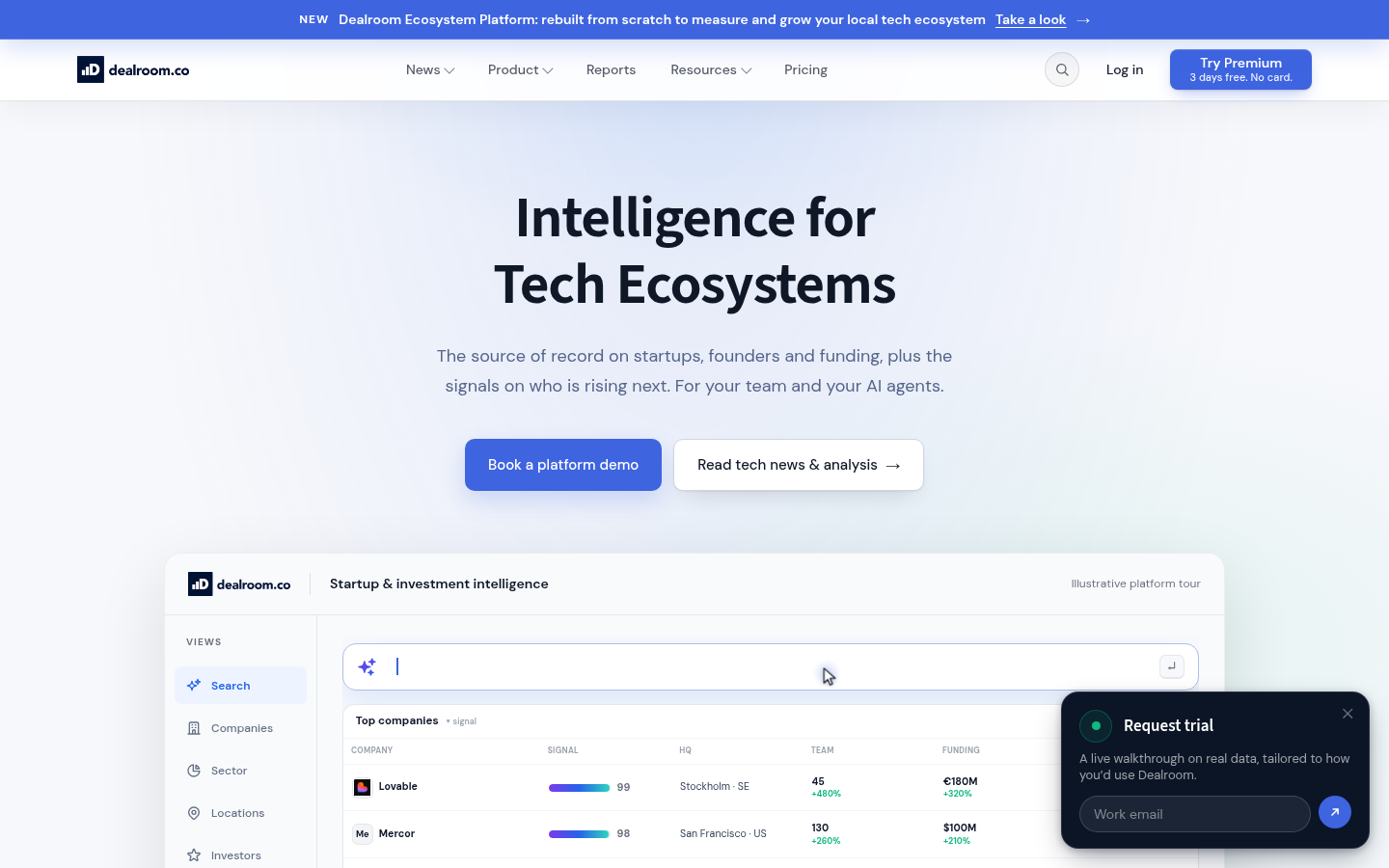
Dealroom
- Deepest European ecosystem coverage in this group
- G2 rating of 4.6 out of 5 with 85% five-star reviews
- Regional funding reports usable in LP updates
- Three-seat minimum raises the entry ticket for two-person funds
- Pricing needs a quote and varies by seat count
- Less depth on US late-stage valuations than PitchBook
The default pick for a EU seed fund replacing Crunchbase.
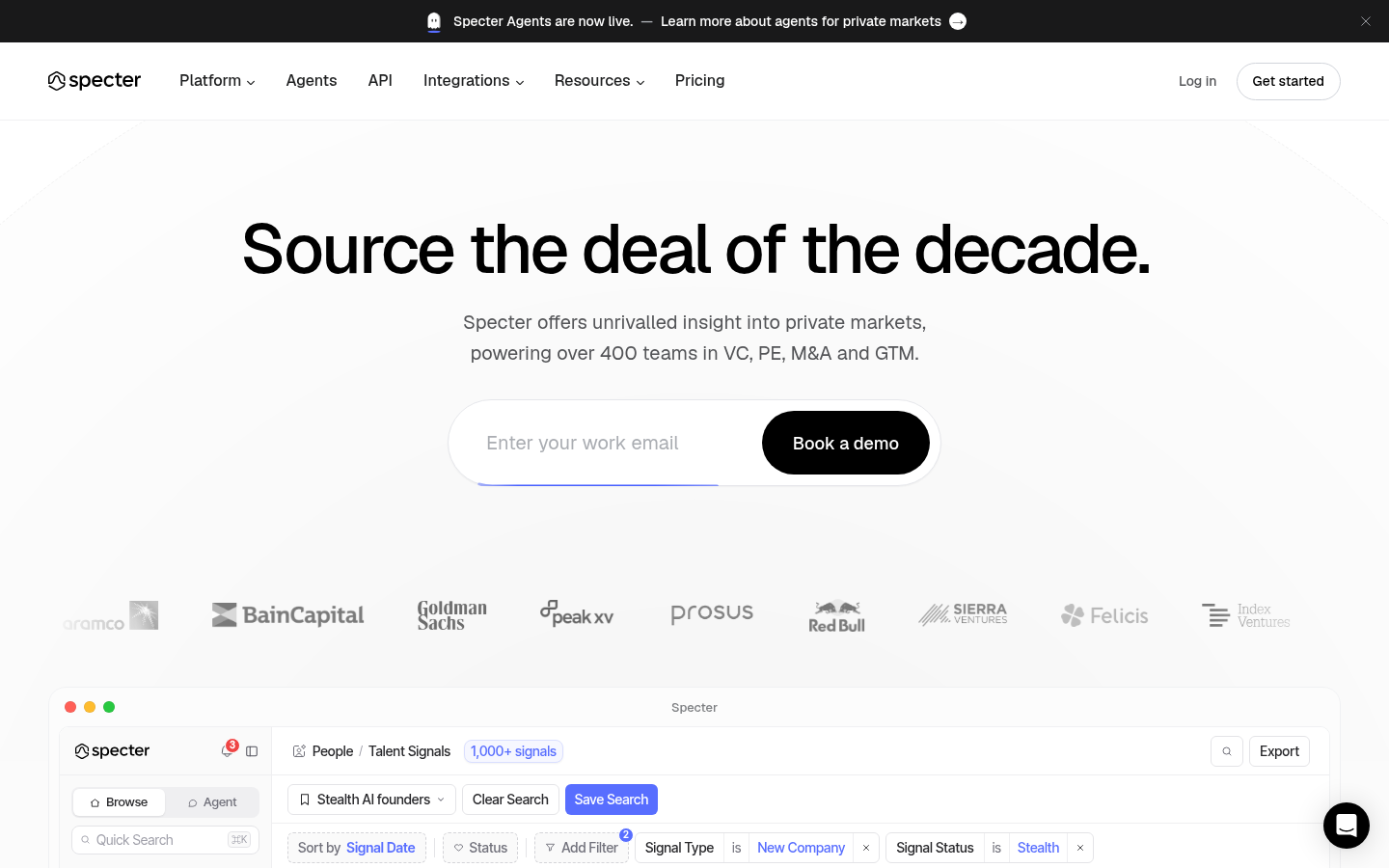
Specter
- People and company data helps surface startups before announcements
- Claims 50M+ companies and 700M+ people in one index
- Index size suits a Monday morning shortlist across many sectors
- Pricing is not public, so budgeting needs a demo call
- Signal quality varies by sector and geography
- Younger product with fewer independent reviews than PitchBook
Strongest for pre-round discovery, weaker as a verified record of deals.
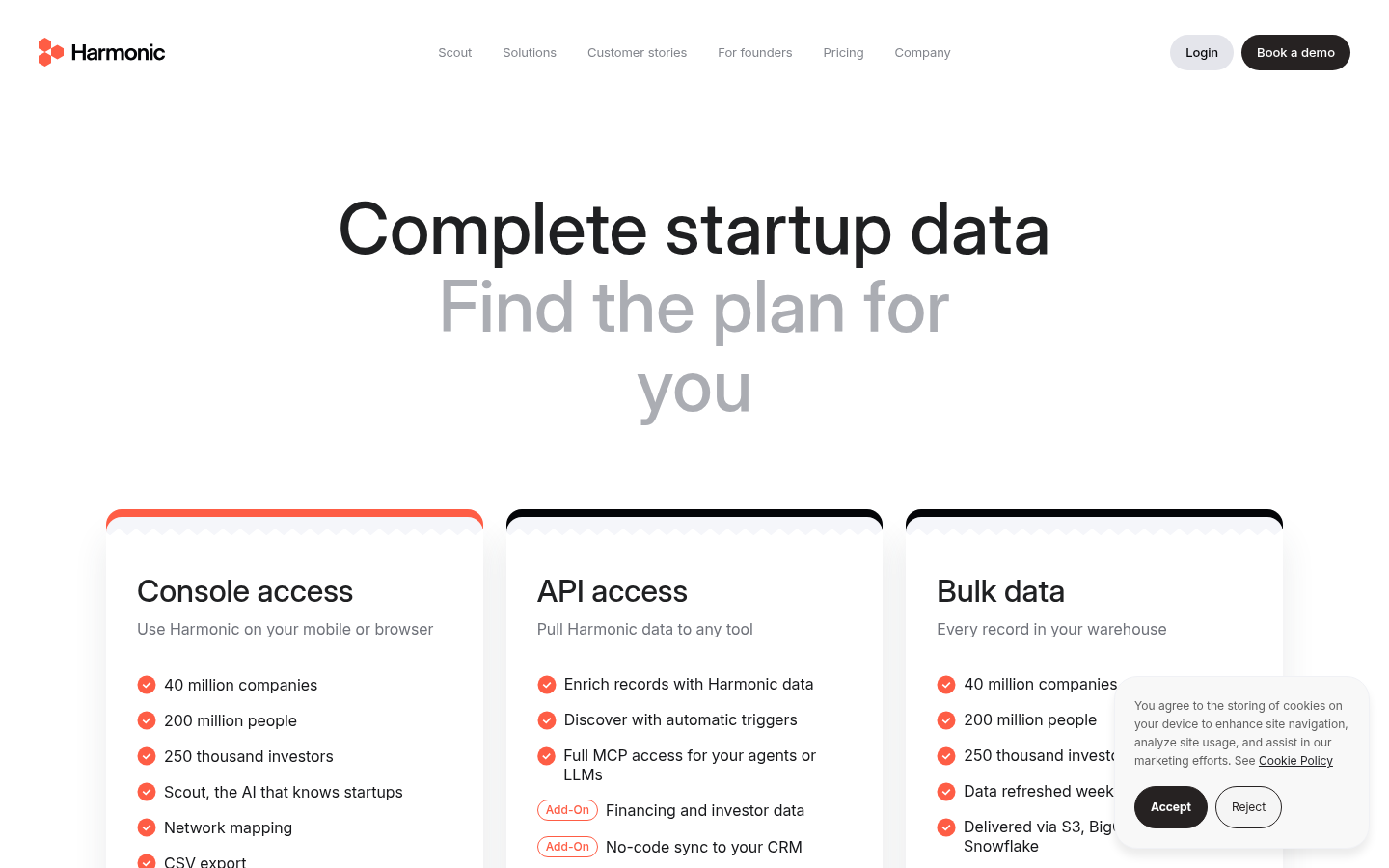
Harmonic
- 40M companies and 200M people profiles in one console
- Scout search accepts plain-language queries
- API, MCP and bulk delivery to S3, BigQuery or Snowflake
- Estimated entry near $25,000 a year for three seats
- No free trial reported, demo required
- Overkill for a fund that only needs occasional lookups
Best fit when sourcing is a daily workflow and a data engineer is on hand.
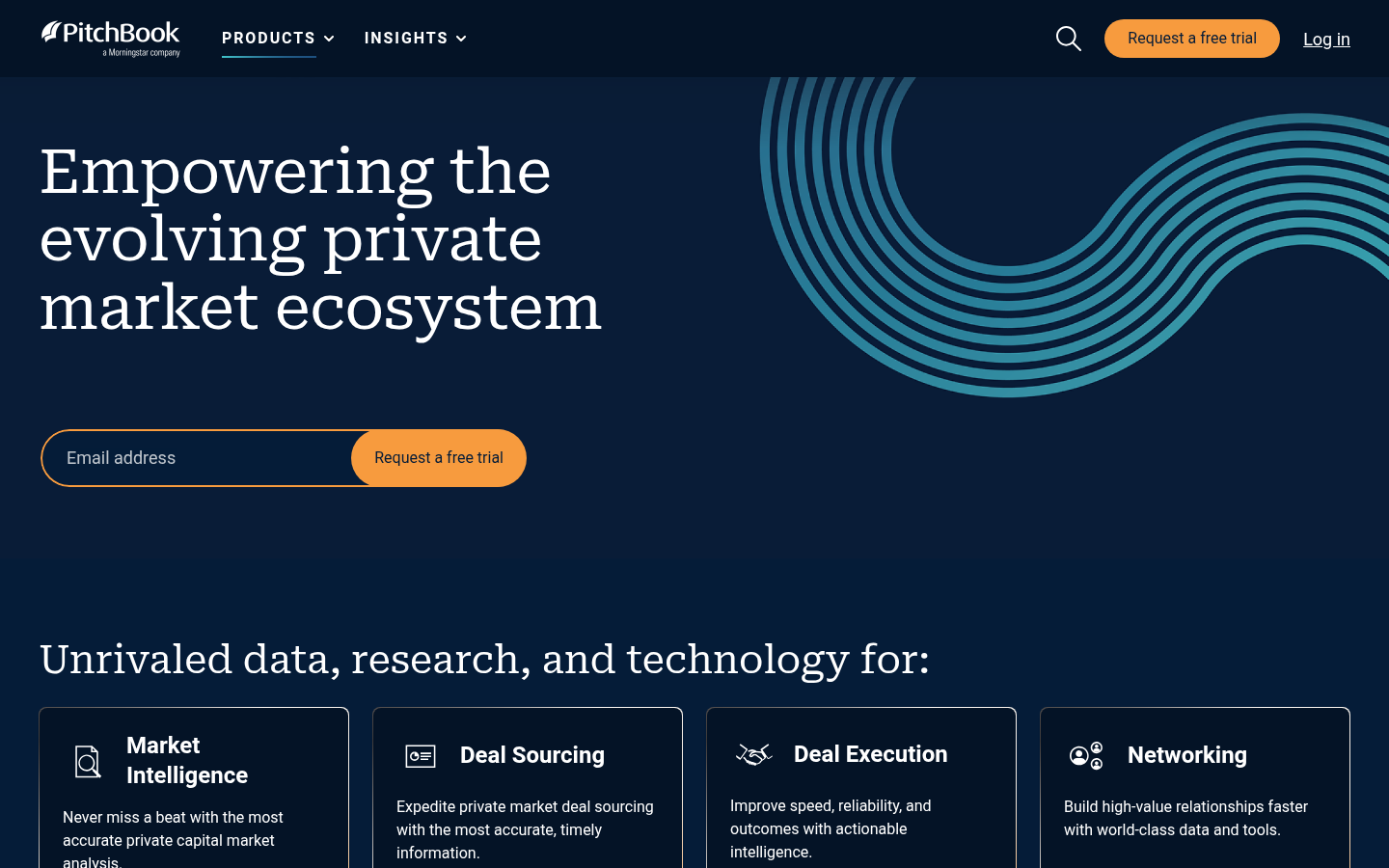
PitchBook
- Verified deal, valuation and fund data from a research team
- G2 rating of 4.5 out of 5 from 261 reviews
- Covers LPs, funds and PE, not only startups
- Estimated $20,000 to $40,000 per seat on annual contracts
- Pricing is negotiated and never published
- Little use for finding companies before a round
The reference for diligence data, at a price small funds rarely justify.
Tracxn
- Free Lite tier lets an analyst test coverage first
- Analyst-written sector reports and a curated taxonomy
- Strong coverage of India and Southeast Asia
- European seed coverage is thinner than Dealroom
- Premium pricing is quoted and varies widely by plan
- Taxonomy depth matters less for single-company lookups
Good for thematic research, secondary for a EU sourcing desk.
Verdict
For a two to five person fund screening European seed deals, Dealroom is the strongest Crunchbase alternative. Pick Specter or Harmonic if you need pre-round signals and can pay a quoted price, and PitchBook only when diligence needs verified valuations. Keep Crunchbase Pro for cheap lookups if the budget is tight.
How we tested
This comparison is desk research, not a hands-on benchmark. We read each vendor's public pricing and product pages, took a homepage screenshot of each on 6 November 2026, and cross-checked coverage claims against G2 ratings and third-party price reports. Where a price is quoted rather than published, we label it as an estimate and cite the range reported by other buyers. We did not run paid tiers against our own deal list. The 0 to 5 fit scores are editorial: they rate each tool for a two to five person early-stage fund in Europe or Switzerland, not average user satisfaction. No vendor paid for placement and none of these products carries an affiliate link on this page.